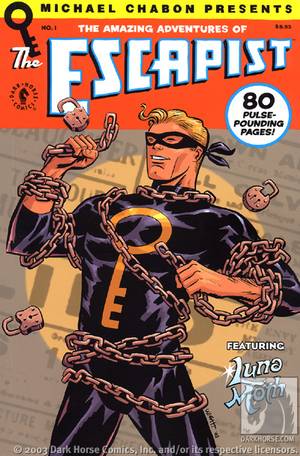
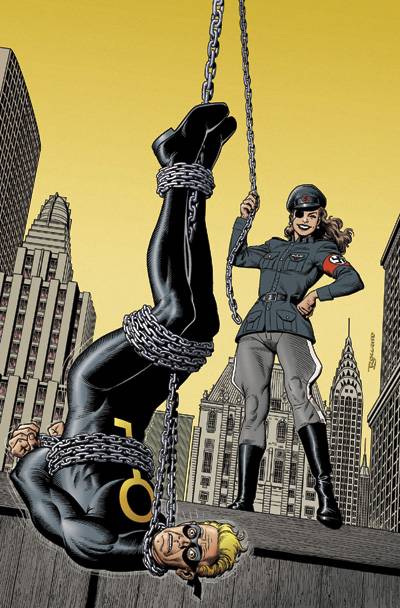
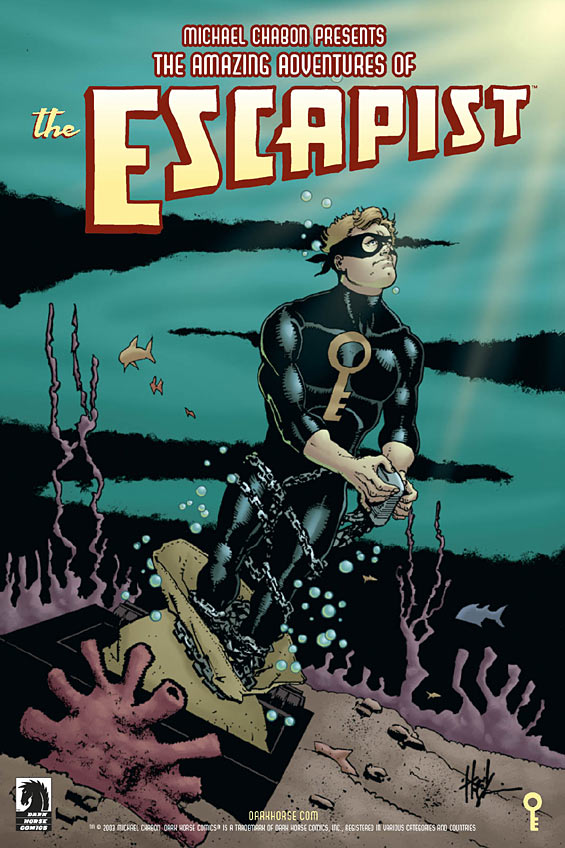
I cannot say that I have ever read a book quite like this one before. The plot starts off as an adventure of sorts as Joe escapes to America, transforming into a story encompassing the American Dream as Sam and Joe rise to success, and then to a romance as Joe falls in love with Rosa Saks and Sam questions his own sexual interests. The constant chronological jumps add even more variety to this mix, creating an unpredictable nature to the novel. Overall, despite its staggering length, The Amazing Adventures of Kavalier and Clay manages to keep the plot interesting by constantly introducing new elements frequently.
The characters themselves are interesting, and each undergo development at different stages of the novel. Initially, the clear focus of the story is Joe, and Sam is more of a background element. Once Joe is fleshed out to a satisfying degree, the book focuses more on the more mysterious Sam, as his mind is not really taken into account until he starts feeling lonely in the shadow of Joe, who now has a girlfriend that he frequently sees. Backing up the main characters is an equally well thought out supporting cast. The American Nazi Carl Ebling is a minor character that Joe simply meets by chance, after destroying his office in anger. In an attempt to exact revenge, Ebling gives the Empire Building a fake bomb scare, that Joe doesn't buy. The event is so much as mentioned in the news paper. Ebling later takes this desire for revenge way too far, becoming the Saboteur, the opposite of the Escapist, as he claims that he is a master of infiltration. He attempts to injure Joe with a pipe bomb, but the plan backfires, and Ebling himself takes the blunt of the explosion. His inclusion as a character is both humorous and depressing, as his actions yield no positive results for him, but the degree to which he works himself up is quite comical. The other characters are as or more complex and interesting, and it is a joy to watch them interact with each other. While the beginning of the novel is more event based, it gradually shifts to a character centric story, focusing on the frequent and interesting interactions between several well crafted characters. I simply enjoy reading this book, because much like Ebling, it is serious, but it has comical overtones. The plot never stays in the same groove to the point of becoming stale, and overall, it was a very interesting read, that stimulated many thoughts as I read it.
Friday, December 11, 2009

Minor Characters, and How They Affect the Story
There are several characters that enter in and out of Sam and Joe's lives, and a lot of them play large roles in their decisions. In this entry, I will talk in particular about Rosa Saks, and Bernard Kornblum.
While not exactly a minor character, Rosa Saks plays a large supporting role in the both the lives of Sam and Joe. Her first meeting with the cousins was abrupt and awkward: Joe saw her naked in bed as he was trying to break into an apartment. He runs into her again later at a party, where she recognizes him, but cannot quite remember how. They introduce themselves, and after a few minutes of discussion, a cry for help is heard. Joe immediately runs downstairs to see Salvador Dali's head stuck in a helmet of a diving. Joe immediately sets to work, twisting a bolt off with the screwdriver component of his knife, saving Salvador's life. Recognizing Joe's quick and serious action, Rosa remembers where she had met him before. She asks him to her art studio, which is actually her room. It is here that she truly connect with Joe, and they start a relationship. Prior to this event, Joe had been working non-stop on his job. Now that he had a girlfriend, he could truly lay back, relax a little bit, and enjoy life more. She directly inspires Joe to focus more on surreal art, as opposed to his previous, harsher and more systematic style. This refueled Joe's passion for art and drawing comics, as he was exploring a fascinating new outlet. Later again, Rosa sympathizes with Sam's loneliness, and suggests that he get himself a girlfriend. Under this pressure and emptiness, Sam decides to take his first available chance at a relationship, which happens to be with Tracy Bacon. This leads to Sam exploring his sexuality throughout the novel. Rosa opens both men up, and builds them up from within, ultimately making them both stronger.
Bernard Kornblum was Joe's childhood instructor in the art of escapism. Joe was intrigued by Houdini and magic in general, and decided to pursue learning about both. After several trial and error instructors, Joe finally settles upon the old, and vastly experienced Kornblum. Kornblum employs a very gradual, deliberate form of training upon Joe, making it clear that he needs to be serious about becoming an escape artist. He eventually presents Joe with a lock picking kit, telling him that he can keep it if he can remove a series of locks from a chair that Kornblum is chained to. Joe is successful, and after more practice with the tools, he becomes determined to prove him self to a society of magicians he has been trying to make it into. After a near death experience when his stunt goes wrong, Kornblum is convinced that Joe is trying to escape in a much more metaphorical sense than a physical one. Later, when Joe fails to make it out of Prague after his family gave up all that they owned, he has nowhere else to turn, so he visits Kornblum seeking help. They devise a complex plan that eventually does get Joe to America. Joe is thankful towards Kornblum, and respects him in a high manner. He is well aware that he is only in America now due to Kornblum's assistance, both in escaping and building Joe into a stronger, wiser man.
While not exactly a minor character, Rosa Saks plays a large supporting role in the both the lives of Sam and Joe. Her first meeting with the cousins was abrupt and awkward: Joe saw her naked in bed as he was trying to break into an apartment. He runs into her again later at a party, where she recognizes him, but cannot quite remember how. They introduce themselves, and after a few minutes of discussion, a cry for help is heard. Joe immediately runs downstairs to see Salvador Dali's head stuck in a helmet of a diving. Joe immediately sets to work, twisting a bolt off with the screwdriver component of his knife, saving Salvador's life. Recognizing Joe's quick and serious action, Rosa remembers where she had met him before. She asks him to her art studio, which is actually her room. It is here that she truly connect with Joe, and they start a relationship. Prior to this event, Joe had been working non-stop on his job. Now that he had a girlfriend, he could truly lay back, relax a little bit, and enjoy life more. She directly inspires Joe to focus more on surreal art, as opposed to his previous, harsher and more systematic style. This refueled Joe's passion for art and drawing comics, as he was exploring a fascinating new outlet. Later again, Rosa sympathizes with Sam's loneliness, and suggests that he get himself a girlfriend. Under this pressure and emptiness, Sam decides to take his first available chance at a relationship, which happens to be with Tracy Bacon. This leads to Sam exploring his sexuality throughout the novel. Rosa opens both men up, and builds them up from within, ultimately making them both stronger.
Bernard Kornblum was Joe's childhood instructor in the art of escapism. Joe was intrigued by Houdini and magic in general, and decided to pursue learning about both. After several trial and error instructors, Joe finally settles upon the old, and vastly experienced Kornblum. Kornblum employs a very gradual, deliberate form of training upon Joe, making it clear that he needs to be serious about becoming an escape artist. He eventually presents Joe with a lock picking kit, telling him that he can keep it if he can remove a series of locks from a chair that Kornblum is chained to. Joe is successful, and after more practice with the tools, he becomes determined to prove him self to a society of magicians he has been trying to make it into. After a near death experience when his stunt goes wrong, Kornblum is convinced that Joe is trying to escape in a much more metaphorical sense than a physical one. Later, when Joe fails to make it out of Prague after his family gave up all that they owned, he has nowhere else to turn, so he visits Kornblum seeking help. They devise a complex plan that eventually does get Joe to America. Joe is thankful towards Kornblum, and respects him in a high manner. He is well aware that he is only in America now due to Kornblum's assistance, both in escaping and building Joe into a stronger, wiser man.
Sam: Foreshadowing and Further Development
In a plot twist that was sudden, but not entirely unexpected, Sam kisses another man (Tracy Bacon). This event employed heavy foreshadowing, as Sam is shown to be unclear about his sexual identity. Sam had often been lonely earlier in the book, and his lack of a companion became even more apparent when his cousin, Joe, got a girlfriend, Rosa Saks. Sam admitted to himself that was Rosa was in fact, very attractive, but he just didn't feel any emotion or desire towards her. He says that he tried to imagine kissing her, but wasn't stimulated in the least. This doesn't necessarily make him gay, but it makes apparent his lack of interest in women. Earlier in the book, Sam was shocked upon discovering two men kissing in the food cabinet at a party. He saw that these men actually had a tender moment, which he had not previously believed possible in a homosexual relationship. He didn't show any signs of disapproval upon stumbling into this scene, and instead took this discovery into account. Much earlier in the book, while Sam is recalling his childhood and his relations with his father, who was a muscleman whose stage name was The Mighty Molecule. He and his father entered a sauna at one point, and Sam saw his dad naked. Instead of being embarrassed, he sort of admired his father's figure, and found himself unintentionally staring at his father's genitalia. This sets up Sam's character leading up to him meeting Tracy Bacon.
Tracy Bacon is an actor that was hired to play the Escapist on a radio program. Sam describes him as being a big, bulky, and admittedly handsome man, that strongly resembled the Escapist both in voice and looks. Bacon later pulls Sam aside to ask him how he could improve his voice for the Escapist, and Sam takes a moment to establish that he had never really been addressed by a man of Bacon's appearance. They later go to a bar and get mildly drunk. While Sam is drunk, he subconsciously invites Bacon to his mother's house for dinner, in Joe's absence. Sam's mother isn't quite sure how to take this, and when Sam says that he think Tracy will do well as the Escapist, his mother replies with, "Will he? (313)" She looks him directly in the eyes upon saying this, and I believe that she is implying to Sam that she has a deeper knowledge of the situation, and that she might even have foreseen the impending relationship between Sam and Tracy.
In the scene where Sam does kiss Tracy, he starts off working a volunteer service for the army, in which he monitors the planes taking off and landing from the top floor of the Empire Building. He thinks about how truly lonely he is up in his solitary post, as a storm approaches. Sam then notices the elevator rising, and out comes Bacon holding some bags that smell of food. At first, Sam tells him to leave, but then changes his mind and insists that Bacon stays. Bacon then proceeds to tell Sam about his fight with his girlfriend while he was eating at her house. She thought he was going to propose to her, but when he didn't, she threw a fit. Bacon then decided to take the food with him as he left, claiming, "Well, it was just sitting there. (351)" Upon further inquiry as to why Bacon came to Sam, he replied , "Well, you were just sitting here. (351)" The food was really nice, and Bacon had also brought wine. As he and Sam eat together at a table, a cliche romantic scene is set up, as the two are alone, in a fascinating location, as the building is now encased in the storm. Suddenly, Bacon kisses Sam while he discusses the lightning rods on the building. Sam initially thinks about everything that is wrong with this action, but then finds himself kissing Bacon back.
This moment was about halfway through the book, and had quite a bit of build up. At the beginning of the book, about 50 pages are spent discussing Joe's childhood, while one page is spent introducing Sam on the second page of the novel. It is very brief, and doesn't reveal much about Sam at all. After Joe is thoroughly developed, the story takes more time to discuss Sam, and his feelings of loneliness and emptiness. It becomes clear that Sam will do what ever is necessary to fill this void in his life, regardless of what the public thinks of it. Sam himself is unsure of his sexual preferences, and seems to be acting more on impulse than rational thought. I had previously stated that Sam seemed to be very uninteresting in the shadow of his cousin Joe, but now that his mind has been explored through the novel, I find that both characters are equally important to the plot.
In the scene where Sam does kiss Tracy, he starts off working a volunteer service for the army, in which he monitors the planes taking off and landing from the top floor of the Empire Building. He thinks about how truly lonely he is up in his solitary post, as a storm approaches. Sam then notices the elevator rising, and out comes Bacon holding some bags that smell of food. At first, Sam tells him to leave, but then changes his mind and insists that Bacon stays. Bacon then proceeds to tell Sam about his fight with his girlfriend while he was eating at her house. She thought he was going to propose to her, but when he didn't, she threw a fit. Bacon then decided to take the food with him as he left, claiming, "Well, it was just sitting there. (351)" Upon further inquiry as to why Bacon came to Sam, he replied , "Well, you were just sitting here. (351)" The food was really nice, and Bacon had also brought wine. As he and Sam eat together at a table, a cliche romantic scene is set up, as the two are alone, in a fascinating location, as the building is now encased in the storm. Suddenly, Bacon kisses Sam while he discusses the lightning rods on the building. Sam initially thinks about everything that is wrong with this action, but then finds himself kissing Bacon back.
This moment was about halfway through the book, and had quite a bit of build up. At the beginning of the book, about 50 pages are spent discussing Joe's childhood, while one page is spent introducing Sam on the second page of the novel. It is very brief, and doesn't reveal much about Sam at all. After Joe is thoroughly developed, the story takes more time to discuss Sam, and his feelings of loneliness and emptiness. It becomes clear that Sam will do what ever is necessary to fill this void in his life, regardless of what the public thinks of it. Sam himself is unsure of his sexual preferences, and seems to be acting more on impulse than rational thought. I had previously stated that Sam seemed to be very uninteresting in the shadow of his cousin Joe, but now that his mind has been explored through the novel, I find that both characters are equally important to the plot.
Thursday, December 10, 2009
Rhetoric Study
Throughout The Amazing Adventures of Kavalier and Clay, Chabon tends to apply ethos to his appeals, mostly in the form of similes, metaphors, hyperbole, and strong description in general. The book spends a lot of time exploring Joe's sad past, and how it adds structure to his motives and influences his decisions. The following excerpt describes an escape act gone wrong from his childhood, in which he almost drowned while trying to escape from a bag underwater.
"Three and a half minutes after he (Joe) had tumbled into the river, kicking his feet in their heavy shoes and two pairs of socks, he burst to the surface. Only Kornblum's breathing exercises had kept him from exhaling every last atom of oxygen in his lungs the instant he hit the water. Gasping now, he clambered up the embankment and crawled on his hands and knees toward the hissing brazier. The smell of coal was like the odor of hot bread, of warm summer pavement. He sucked up deep barrelfuls of air. The world seemed to pour in through his lungs: Spidery trees, fog, the flickering lamps strung across the bridge, a light burning in Kepler's old tower in the Klementinum. Abruptly, he was sick, and spat up something bitter and shameful and hot. He wiped his lips with the sleeve of his wet wool shirt, and felt a little better. Then he realized that his brother had disappeared. Shivering, he stood up, his clothes hanging heavy as chain mail, and saw Thomas in the shadow of the bridge, beneath the carved figure of Bruncvik, chopping clumsily at the water, paddling, gasping, drowning. (36)"
This passage in particular has a strong emotional base, as the protagonist, Joe, almost dies, and then as he witnesses and saves his brother from drowning. Chabon frequently uses strong descriptive words in a rapid-fire fashion, such as, "Bitter and shameful and hot," and, "Paddling, gasping, drowning." While not exactly repetition, this barrage of information leaves and impression, as the reader processes several ideas all at once. Similes are also used in excess, as the weight of his wet clothing is compared to that of chain mail, creating a very realistic feel of the scene, as the reader can "feel" the weight that Chabon is describing. Throughout the entire book, these similes help explore unusual feelings and ideas, materialize them, and make them much more palatable. Also present, and often in accordance with the similes, is hyperbole. While it is clear that Joe wouldn't expel every single oxygen molecule from his body upon hitting the frigid water, it creates a sense of suffocation in the reader, in that they can imagine their own lungs emptying in a similar fashion. Chabon also spends a lot of time describing the surrounding elements of a scene when he finds it to be of importance, which is used in this passage to temporarily shift the focus of the situation. This creates a lull in the progression of the story, as Joe regains his senses and takes in his surroundings. The reader is also drawn into this distraction, and allowed to forget, along with Joe, about Thomas. The alarm that Joe experiences as he notices that Thomas is missing is amplified by the calm observance that took place during the preceding sentences. When all these devices come together, the reader becomes thoroughly drawn into the situations that the characters face, and makes them easier for the reader to connect to and relate with.
Another minor example of rhetoric would be Chabon's occasional use of allusion, on both obvious and slightly more complex planes. The novel frequently refers to people and ideas that actually exist in real life, such as Superman, Batman, Salvador Dali, Orson Welles, and Citizen Kane. In effect, this creates a tangible universe, that is hardly different than the real world. The world that Chabon creates can be viewed as a large scale allusion to reality, save for a few minor adjustments. He successfully creates a surreal sense of interaction, as his fictionalized characters interact with real people, and both seem equally lifelike.
"Three and a half minutes after he (Joe) had tumbled into the river, kicking his feet in their heavy shoes and two pairs of socks, he burst to the surface. Only Kornblum's breathing exercises had kept him from exhaling every last atom of oxygen in his lungs the instant he hit the water. Gasping now, he clambered up the embankment and crawled on his hands and knees toward the hissing brazier. The smell of coal was like the odor of hot bread, of warm summer pavement. He sucked up deep barrelfuls of air. The world seemed to pour in through his lungs: Spidery trees, fog, the flickering lamps strung across the bridge, a light burning in Kepler's old tower in the Klementinum. Abruptly, he was sick, and spat up something bitter and shameful and hot. He wiped his lips with the sleeve of his wet wool shirt, and felt a little better. Then he realized that his brother had disappeared. Shivering, he stood up, his clothes hanging heavy as chain mail, and saw Thomas in the shadow of the bridge, beneath the carved figure of Bruncvik, chopping clumsily at the water, paddling, gasping, drowning. (36)"
This passage in particular has a strong emotional base, as the protagonist, Joe, almost dies, and then as he witnesses and saves his brother from drowning. Chabon frequently uses strong descriptive words in a rapid-fire fashion, such as, "Bitter and shameful and hot," and, "Paddling, gasping, drowning." While not exactly repetition, this barrage of information leaves and impression, as the reader processes several ideas all at once. Similes are also used in excess, as the weight of his wet clothing is compared to that of chain mail, creating a very realistic feel of the scene, as the reader can "feel" the weight that Chabon is describing. Throughout the entire book, these similes help explore unusual feelings and ideas, materialize them, and make them much more palatable. Also present, and often in accordance with the similes, is hyperbole. While it is clear that Joe wouldn't expel every single oxygen molecule from his body upon hitting the frigid water, it creates a sense of suffocation in the reader, in that they can imagine their own lungs emptying in a similar fashion. Chabon also spends a lot of time describing the surrounding elements of a scene when he finds it to be of importance, which is used in this passage to temporarily shift the focus of the situation. This creates a lull in the progression of the story, as Joe regains his senses and takes in his surroundings. The reader is also drawn into this distraction, and allowed to forget, along with Joe, about Thomas. The alarm that Joe experiences as he notices that Thomas is missing is amplified by the calm observance that took place during the preceding sentences. When all these devices come together, the reader becomes thoroughly drawn into the situations that the characters face, and makes them easier for the reader to connect to and relate with.
Another minor example of rhetoric would be Chabon's occasional use of allusion, on both obvious and slightly more complex planes. The novel frequently refers to people and ideas that actually exist in real life, such as Superman, Batman, Salvador Dali, Orson Welles, and Citizen Kane. In effect, this creates a tangible universe, that is hardly different than the real world. The world that Chabon creates can be viewed as a large scale allusion to reality, save for a few minor adjustments. He successfully creates a surreal sense of interaction, as his fictionalized characters interact with real people, and both seem equally lifelike.
Image Study
Empire Building

The Empire State Building serves as a consistent symbol throughout the novel, as Joe and Sam work their way to eventually obtaining a floor in this famous structure. The tower itself stands out immensely among the much smaller buildings that immediately surround it, reflecting the vast success of its inhabitants over the masses. Joe and Sam start off at the bottom, with nothing carrying them forward other than their own determination and enthusiasm. As they progress, Joe and Sam move up both literally and figuratively, expanding their workforce and offices as they grow more popular. This climb to the top reaches its zenith as they look over the world from high above the city, in their luxurious and spacious new office complex.
The Escapist
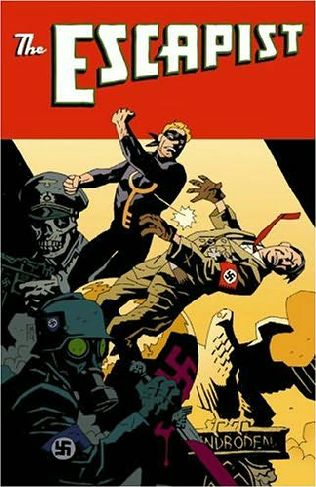
Having obtained a grudge against Germany due to the invasion of his homeland, Joe uses his incredibly successful comic superhero, the Escapist, to convey his thoughts. The image above is from the cover of Sam and Joe's first comic book attempt, which was published in spite of possible controversy. Several times throughout the novel, Joe refuses to censor or alter the work that he has already finished and thought out. Joe is well aware that he has no real power over the war in Europe, but for a good while he is content with abstracting his vengeance through conveying the destruction of the Nazis in the universe he created. He later realizes the futility of his imaginary war, but is convinced that he had created his message, and secretly hoped that one day Hitler himself would see the picture.
Luna Moth

Later in the novel, Joe falls in love with Rosa Saks, an unusual but beautiful woman. Upon entering her room, he saw a multitude of moths scattered throughout the room. Rosa says that she isn't sure why there are so many moths in the upper portion of her house. Later again, Joe notices a crowd of people gathered around a caged tree while he is walking through the city. Upon closer inspection, he sees a luna moth (pictured above), and notes its strange beauty. Joe then whispers "Rosa" under his breath, and the moth flies off as he finishes the name. This leads to Joe making a connection between Rosa and moths, as both have an unorthodox elegance that requires a certain mindset to truly be appreciated. Rosa is the direct inspiration for Joe's new superheroine, the Luna Moth. Through this comic, Joe really tries to create a fantastical element via his art, to capture this essence that he sees in Rosa.
Lock
 Locks commonly represent barriers, which can be broken, but not easily. Early in the novel, Joe learns the art of Houdini-esque escape due to fascination with the concept of being able to break through his obstacles, be they as simple as a padlock or as complex as fleeing to America from a war struck Prague. Korblum, and old magician, teaches Joe this art until he ceases upon believing that Joe is not trying to "prove the superior machinery of (his) body against outlandish contraptions and the laws of physics, but for dangerously metaphorical reasons. (37)" With this clear motivation, Joe decided to live his life in support of his ideals, without letting himself be obstructed physically or mentally. When he first starts drawing the Escapist comics, Joe refuses Anapol's advice to leave out Hitler and the Nazis, deciding that his message was of higher priority than pleasing his boss. Joe doesn't stop drawing the Nazis into his comic until he personally realized the futility of his approach on the situation. On multiple other occasions throughout the novel, Joe turns down offers involving his comics that lose track of the point he is trying to make, even in the face of a large potential monetary gain. It is this same determination that presses Joe to work so hard, with hopes that he will be able to obtain the means to reunite with his family against odds. Assuring the passage of his little brother, Thomas, into the United States, becomes a priority to Joe. He is hoping that Thomas will be able to (With his assistance) break through the many boundaries on his journey to rejoin him.
Subscribe to:
Posts (Atom)